
In Part 1, we explored how your banker can become a strategic partner in positioning your business for growth. In Part 2, we looked at how the right accountant helps you understand your numbers and make informed decisions.
Now we turn to a role that is often overlooked until something goes wrong.
Insurance.
For many business owners, insurance feels like a checkbox. Something you are required to have, something you pay for, but not something you actively think about.
Until you need it.
The reality is, insurance is not just protection. It is strategy.
Risk Is Part of Business. Planning for It Is Leadership.
Every business carries risk.
Whether it is a client dispute, property damage, data breach, employee issue, or unexpected interruption, the question is not if something could happen. It is when, and how prepared you are to respond.
Strong business owners do not ignore risk. They plan for it.
Insurance allows you to continue operating even when something unexpected disrupts your business. It protects your assets, your reputation, and in many cases, your ability to keep moving forward.
Without it, one incident can undo years of work.
Insurance Is Not One-Size-Fits-All
One of the biggest misconceptions about insurance is that a single policy will cover everything.
In reality, your coverage should reflect how your business operates.
Depending on your business, this may include:
- General liability insurance
• Professional liability (errors and omissions)
• Property insurance
• Workers’ compensation
• Cyber liability coverage
• Business interruption insurance
Each type of coverage addresses a different area of risk. The goal is not to purchase everything available, but to understand what risks are relevant to your business and build coverage accordingly.
This is where the relationship matters.
Your Insurance Advisor Should Understand Your Business
An insurance agent is not just there to sell you a policy. At their best, they function as a risk advisor.
They should ask questions about how your business operates, what services you provide, how you interact with clients, whether you have employees, and how your business may evolve over time.
The better they understand your business, the better they can guide you toward the right coverage.
This is especially important as your business grows. What worked when you were operating solo may not be sufficient once you hire a team, sign larger contracts, or expand your services.
Your coverage should grow with you.
Protection Creates Opportunity
Many business owners view insurance strictly as a cost.
But the right coverage can actually create opportunity.
Certain contracts, partnerships, and clients require specific types of insurance. Without it, you may not even be considered.
Having proper coverage in place allows you to:
- Qualify for larger contracts
• Work with corporate or government clients
• Protect your business during expansion
• Operate with greater confidence
In this way, insurance is not just about protecting against loss. It is about positioning your business for growth.
Review and Update Regularly
Another common mistake is setting up insurance once and never revisiting it.
Your business changes. Your services evolve. Your revenue grows. Your risk profile shifts.
Your insurance should reflect those changes.
Set a regular cadence to review your coverage, whether annually or during major business milestones. This ensures that you are not underinsured or carrying coverage that no longer aligns with your needs.
Staying proactive in this area can prevent costly gaps later.
Peace of Mind Is a Business Asset
Running a business already requires constant decision-making and problem-solving. The last thing you want is to operate with uncertainty about whether you are protected if something goes wrong.
Insurance provides a level of stability that allows you to focus on growth instead of constantly worrying about risk.
That peace of mind is not intangible. It directly impacts how confidently you lead your business.
Looking Ahead
Insurance is often viewed as a safety net. But in reality, it is part of the structure that allows your business to grow without unnecessary vulnerability.
When you approach it strategically, it becomes less about checking a box and more about protecting the future you are building.
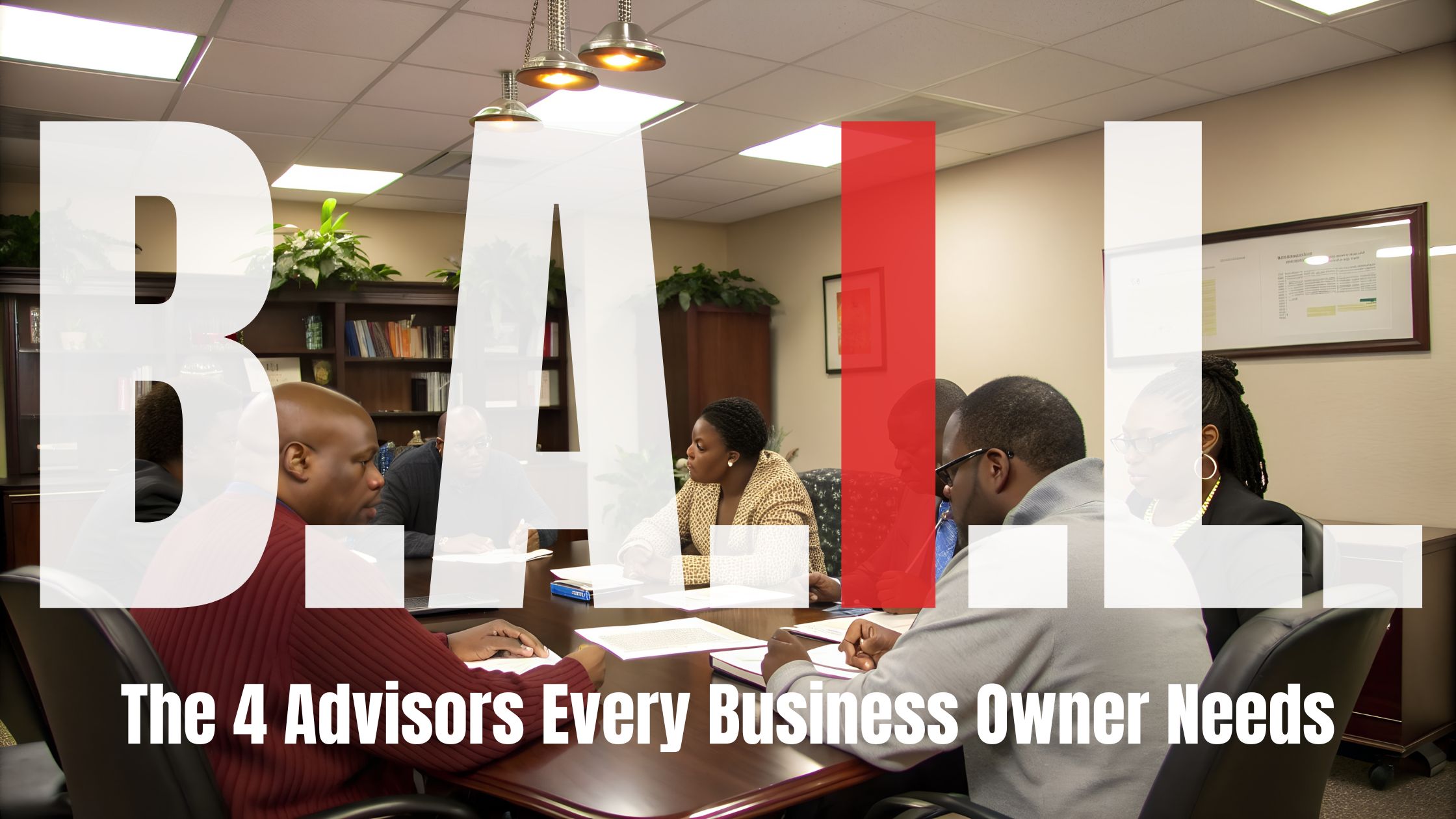
That is the role of your BAIL team. Each advisor plays a part in strengthening your foundation so you can operate with clarity, confidence, and resilience.
In Part 4 of this series, we will look at the final piece of the BAIL framework.
Legal.
Because building your business the right way from the start can prevent challenges that are far more difficult, and expensive, to fix later.